
Introduction
Gamma-Butyrolactone (GBL) and Gamma-Hydroxybutyrate (GHB) are two closely related chemical compounds that frequently appear in both industrial literature and public health discussions. Because they are so intimately linked chemically, they are often confused or spoken about interchangeably by the general public. However, they possess distinct chemical properties, serve vastly different primary purposes, and are handled differently under the law. Explore our dedicated articles on <a href="https://gblexpresshop.com/en/gbl/">Gamma-Butyrolactone (GBL)</a> and <a href="https://gblexpresshop.com/en/ghb/">Gamma-Hydroxybutyrate (GHB)</a> for in-depth individual breakdowns.
This comprehensive educational guide aims to clarify the relationship between GBL and GHB. We will explore their chemical structures, their primary applications in industry and medicine, how they interact physiologically, and why understanding the differences between these two potent compounds is crucial for safety and regulatory compliance.
Chemical Properties and Structure
What is GBL?
Gamma-Butyrolactone (GBL) is a cyclic ester, specifically a lactone. In its pure form, it is a clear, colorless, and oily liquid with a weak characteristic odor. It has a high boiling point and is fully miscible with water, which gives it exceptional solvent properties. GBL is highly stable under neutral conditions but is highly hygroscopic, meaning it absorbs moisture from the air.
What is GHB?
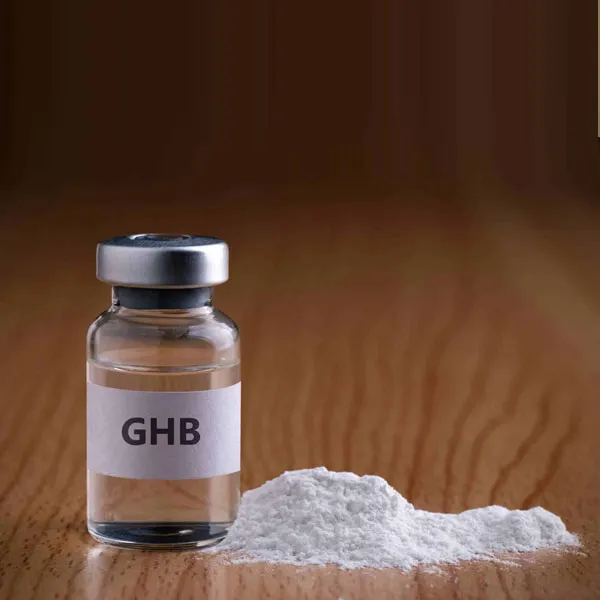
Gamma-Hydroxybutyric acid (GHB), on the other hand, is a short-chain carboxylic acid featuring a hydroxyl group. While it can exist as a free acid, it is notoriously unstable in that form and rapidly converts into GBL. Therefore, GHB is almost always encountered as a stable salt, such as sodium oxybate (sodium gamma-hydroxybutyrate) or potassium gamma-hydroxybutyrate. As a salt, it typically appears as a white crystalline powder that readily dissolves in water.
The Conversion: The Prodrug Relationship
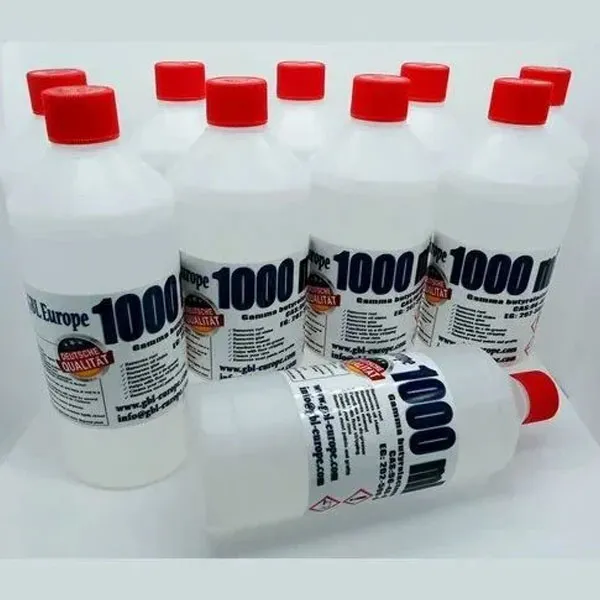
The most critical link between GBL and GHB is their metabolic relationship. GBL acts as a "prodrug" to GHB. A prodrug is a biologically inactive (or less active) compound that can be metabolized in the body to produce a drug.
When an individual ingests GBL, enzymes in the blood and liver—specifically lactonase—rapidly hydrolyze the lactone ring, converting GBL directly into GHB. This conversion happens very quickly in the human body, usually within minutes. Because of this fast metabolism, the physiological effects of ingesting GBL are virtually identical to those of ingesting GHB, although the onset may be slightly delayed or more intense due to differences in bioavailability and absorption rates. To see practical solvent uses in industry, view our <a href="https://gblexpresshop.com/en/applications/">industrial applications overview</a>.
Chemically, GBL can also be converted to GHB outside the body (ex vivo) by reacting it with a strong base like sodium hydroxide (NaOH) in a process known as saponification. This simple reaction breaks the lactone ring and yields the stable sodium salt of GHB (sodium oxybate). It is this ease of conversion that heavily influences the legal status of GBL worldwide.
Industrial Uses vs. Medical Applications
The primary intended uses for GBL and GHB could not be more different, spanning the gap between heavy industry and specialized medicine.
GBL: The Industrial Workhorse
GBL is almost entirely recognized for its industrial applications. It is a powerful solvent used for heavy-duty cleaning, such as stripping paint, removing graffiti, and cleaning engines. Furthermore, GBL is a vital chemical intermediate. It is heavily utilized in the production of pyrrolidones (like NMP), which are essential for manufacturing everything from pharmaceuticals to agricultural chemicals. It also finds use in electronics manufacturing, specifically for stripping photoresists off semiconductor wafers, and as a solvent in advanced battery electrolytes.
GHB: Neuromodulator and Pharmaceutical
Unlike GBL, GHB occurs naturally in the human central nervous system in trace amounts, acting as a neuromodulator. Medically, the sodium salt of GHB (sodium oxybate) is FDA-approved for very specific treatments. Its primary legitimate medical application is in the treatment of narcolepsy with cataplexy. When administered at night under strict medical supervision, it helps consolidate sleep and reduces excessive daytime sleepiness and sudden loss of muscle tone. GHB has no recognized role as an industrial solvent.
Safety, Risks, and Toxicity
Both substances carry significant risks, but the nature of the hazards differs based on their typical environments of use.
GBL Hazards: As an industrial chemical, undiluted GBL is a severe irritant. Direct contact can cause chemical burns, severe eye damage, and mucosal irritation. Proper Personal Protective Equipment (PPE) is required when handling it in industrial settings. If ingested, GBL is highly toxic due to its rapid in vivo conversion to GHB, leading to profound central nervous system depression.
GHB Hazards: The primary hazard of GHB lies in its extreme potency as a central nervous system depressant. It has a notoriously steep dose-response curve. A slight miscalculation in dosage can push the effects from mild sedation and euphoria into a deep, unarousable coma, severe respiratory depression, and death. Combining GHB (or GBL) with alcohol or other depressants exponentially increases the risk of a fatal overdose. Additionally, chronic use of GHB leads to severe physical dependence, resulting in a dangerous withdrawal syndrome that can be life-threatening if not medically managed.

Legal and Regulatory Differences
The stark difference in applications is mirrored in how international drug enforcement agencies classify these chemicals.
GHB Regulation: Because of its history of recreational abuse and association with drug-facilitated crimes, GHB is strictly controlled. In the United States and many other countries, illicit GHB is a Schedule I controlled substance. The medical pharmaceutical formulation (sodium oxybate) is typically classified separately (e.g., Schedule III in the US) to allow for prescription use, though it remains under heavily restricted distribution programs.
GBL Regulation: The regulation of GBL is more complex because it is a necessary chemical for legitimate global industry. Banning it entirely would cripple several manufacturing sectors. Instead, GBL is typically classified as a "List I Chemical" or a controlled substance precursor. This means its sale and distribution are strictly monitored. Industrial buyers must often register, provide end-use declarations, and submit to government tracking to ensure the chemical is not diverted into illicit channels for GHB production or direct human consumption.

Conclusion
While GBL and GHB are chemically bound by a simple metabolic and synthetic bridge, they are fundamentally different substances in practice. GBL is a robust, highly effective industrial solvent and chemical intermediate that keeps modern manufacturing running smoothly. GHB is a powerful central nervous system depressant with a narrow, heavily regulated medical application and a high potential for dangerous abuse.
Understanding the distinction between the two—and respecting the significant hazards both pose when handled improperly—is vital for professionals in the chemical industry, the medical field, and the general public alike.